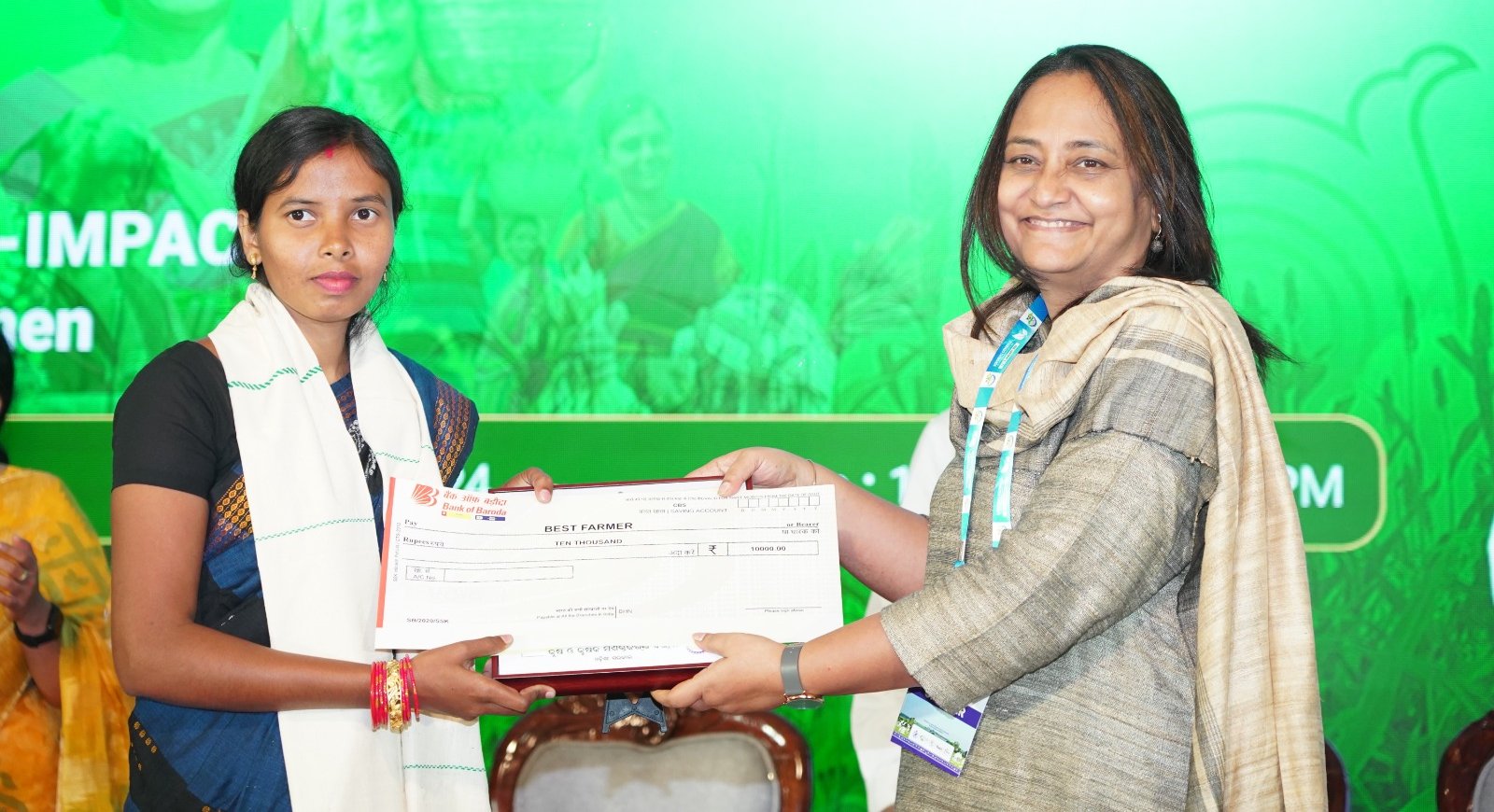
The International Rice Research Institute (IRRI) and the CGIAR GENDER Impact Platform, in collaboration with the Department of Agriculture and Farmers’ Empowerment (DA&FE), organised a panel discussion on 'Migration – Impact on Farm Women' during Krushi Odisha 2024 on January 14, 2024. Chaired by Dr. Ranjitha Puskur, an eminent researcher specializing in Gender and Livelihoods and Leader of the Evidence Module of GENDER, the event brought together distinguished panelists including Dr. Amrita Datta, Assistant Professor of Development Studies, IIT Hyderabad; Ms. Jasmine Giri, Independent Researcher, Bhubaneswar; Dr. Luna Panda, Executive Director, Pragati, Koraput; and Dr. Santosh Kumar Khatua, Joint Director-SCWD, Govt of Odisha. Over 150 women from migrant families participated in the session, sharing valuable insights into their challenges and understanding how fellow women farmers overcome them.
The CGIAR GENDER Impact Platform in collaboration with IRRI and IIT, Hyderabad, conducted a mixed methods study in Odisha on migration to generate data to understand migration patterns and their impact on the livelihoods of rural households and women who are left behind. While presenting the intricate challenges faced by women in migrant families, Dr. Ranjitha Puskur highlighted, “one significant challenge is the low productivity on farms managed by women which is attributed to a lack of knowledge and skills in farm management, limited access to technologies and training opportunities, and a dearth of institutional credit. The absence of access to 'women-friendly' machinery and equipment further hinders their efficiency.”
Social challenges also play a significant role, with women burdened by domestic care work including childcare and taking care of elders and, limited mobility. On the other hand, health challenges add another layer of complexity as women face drudgery, exposure to harmful chemicals and pesticides, undernutrition, and limited access to healthcare services. She said, “these interconnected challenges create a cycle of vulnerability for women left behind, requiring comprehensive and targeted interventions to break the barriers hindering their progress and empower them economically and socially.”
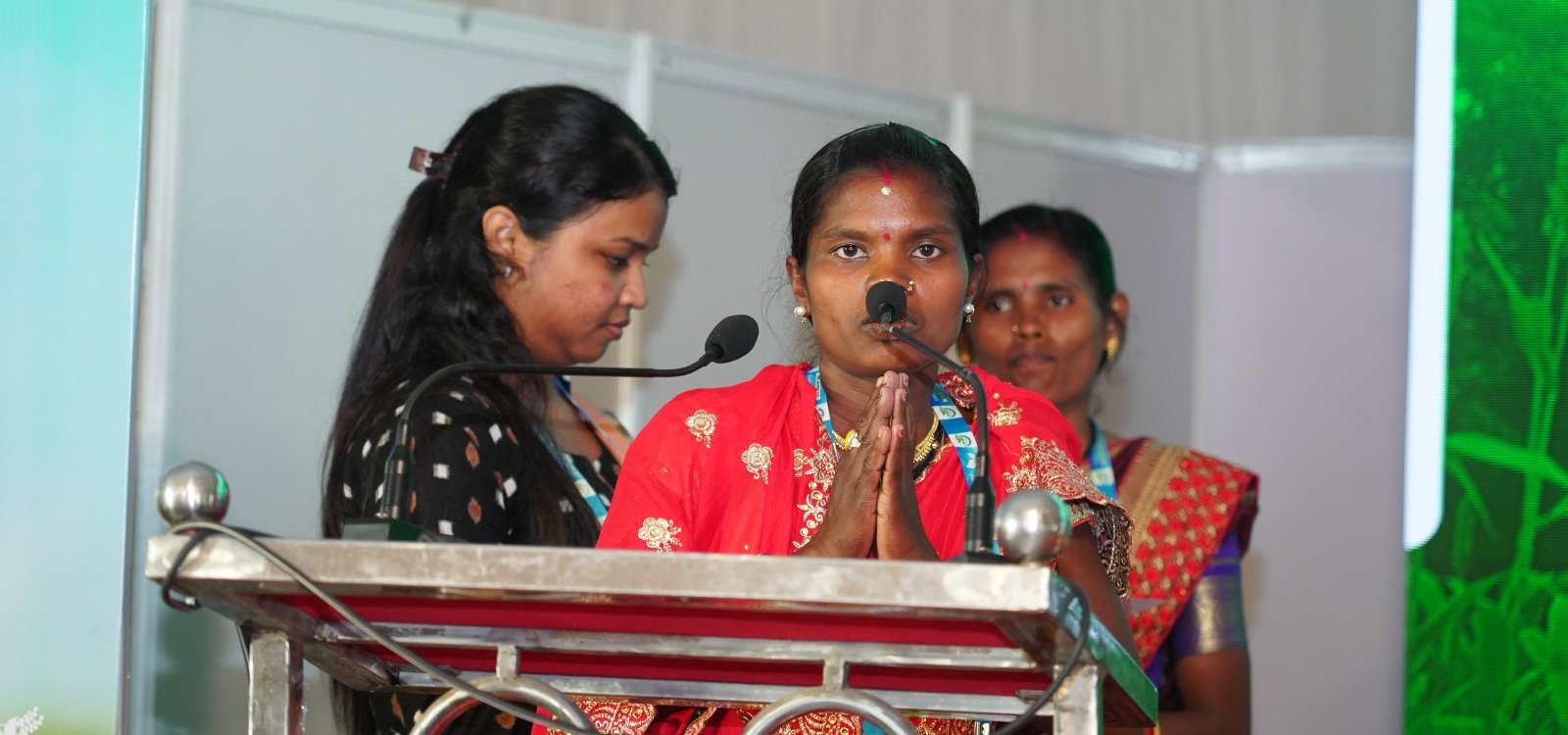
Smt Laxmi Durua and Smt Kuni Harijan, women farmers from migrant households from Koraput district, shared their firsthand experiences highlighting the challenges they faced when their male family members migrated for livelihood opportunities. Kuni said, “managing agriculture has been extremely challenging for me due to a lack of necessary knowledge and resources. To meet our agricultural expenses, we've had to borrow money from local money lenders in our village. By the time he returns home and we repay the loans, we hardly have anything left in our hand.” Their stories provided an important touchpoint for the discussion, underscoring the need for targeted interventions.
The moderated panel discussion that followed explored various dimensions of the issue, including economic opportunities, resilient livelihoods, social engineering, collectivization, government schemes, and policy interventions. During the panel discussion, Dr. Amrita Datta remarked, "to augment agricultural income, diversifying crops including vegetables instead of relying solely on rice cultivation is imperative. There is a pressing need to improve irrigation facilities, enabling farmers to engage in dual cropping, while also implementing measures to safeguard crops from animals."
Dr. Luna Panda highlighted that men in the age group of 15-40, non-land-owning households, and farmers reliant on rainfed cultivation are particularly prone to migration. She provided valuable insights into successful practices such as the half-acre model farm, which has demonstrably improved the lives of women farmers in migrant households. Dr. Panda further advocated for changes in social and gender norms, proposing policy measures to effectively address these challenges.
Ms Jasmine emphasized the profound impact of climate change on the cropping cycle, significantly affecting smallholder farmers. She proposed to leverage economic subsidies and loans provided by the Government. At the same time, she highlighted the major obstacle lies in the fact that the lands are not registered in the names of these women farmers, impeding their access to loans from banks.
Dr. Khatua illuminated the significance of farming system diversification in enhancing the livelihoods and incomes of women farmers. The discussion expanded to explore year-round engagement opportunities through existing schemes such as MGNREGA and Farm Pond+. These initiatives provide avenues for women to diversify their agricultural activities, contributing to the strengthening of livelihoods and incomes.
What can be learned from the FPC promotion efforts in India?
IRRI expresses its sincere gratitude to the esteemed panelists, moderators, women farmers and the engaged audience for contributing to this enriching discourse. The insights shared during this event will undoubtedly serve as a catalyst for future initiatives aimed at empowering women in migrant households in the agricultural sector.
International Rice Research Institute (IRRI)
IRRI is dedicated to abolishing poverty and hunger among people and populations that depend on rice-based agri-food systems. Through our work and partnerships, we aim to improve the health and welfare of rice farmers and consumers; promote environmental sustainability in a world challenged by climate change; and support the empowerment of women and the youth in the rice industry.
IRRI is a member of One CGIAR, the world's largest agricultural research partnership dedicated to a food-secure future.
For more information, please contact:
-
Dr Ranjitha Puskur, Researcher - Gender and Livelihoods and Module
Leader-Evidence, CGIAR GENDER Platform
E-mail r.puskur@irri.org -
Devi Prasad Mahapatra, Specialist – Knowledge Management
E-mail d.p.mahapatra@irri.org